The TTS that rewrites your text so it sounds spoken
Most text-to-speech reads your words exactly as written. ListenHub TTS rewrites them into spoken language first. Five clips, two head-to-head.
We built this because of one email from one user. Here is the problem it solves, and five audio clips that make the case better than any spec sheet.
It started with a tutorial we never planned to write
Within weeks of launching ListenHub in May 2025, we passed 10,000 registered users.
The most memorable of them was an elderly gentleman. He found ListenHub online, couldn't work out how to use it, and emailed to ask whether we had a tutorial.
My first thought was: a tutorial? For ListenHub? It's so simple.
That was the lesson. A product that feels obvious to people who build AI all day can still be genuinely hard for everyone else.
So I wrote back — "we don't have one yet, but I'm writing it now" — opened Notion, and wrote the plainest tutorial of my life.
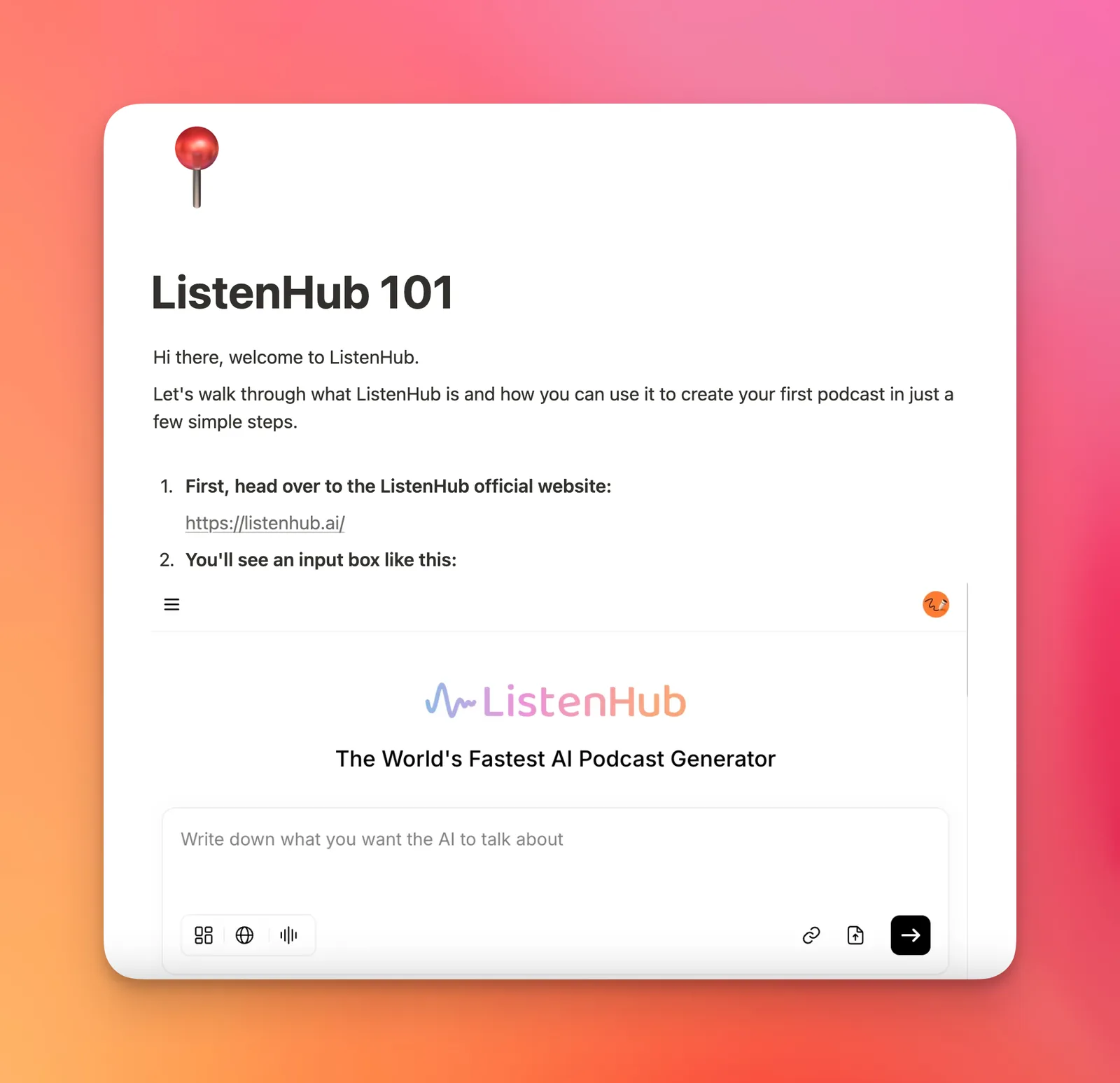
That draft became the guide we still publish as ListenHub 101.
Over the emails that followed, I learned who I'd been writing it for.
In 1957, Bill Vick served as a Force Recon Pathfinder in the United States Marine Corps. When he wrote to us in 2025, he was in his late eighties and fighting on a different front: years of idiopathic pulmonary fibrosis and four strokes had taken his ability to speak.
The Marine in him didn't stop. He founded PF Warriors, a global support community for people living with the disease, and he now uses ListenHub as his voice — generating audio to share with that community and help others going through the same thing.
That's the whole job, really. Build things that help actual people.
Podcasts are one way to be heard. They aren't the only one. So we set out to build a general-purpose AI voice: one that could host a show, explain a paper, deliver a speech, or read a novel. It ships as ListenHub text to speech.
Written language and spoken language are different things
Fair question: there are plenty of text-to-speech services already. Why build another?
Because text that reads well often sounds terrible out loud, and speech that sounds natural rarely looks right on the page. Academic papers, news articles, chatbot answers — all of it is designed to be read.
Most TTS tools read your text exactly as written. That's like presenting by reading your slides aloud, word for word. It technically covers the material and nobody follows it.
ListenHub TTS adds the step everyone skips: it rewrites written text into spoken language, then speaks that. Same meaning, restructured for an ear instead of an eye. You can also switch the rewrite off and get word-for-word reading, which is what you want for a contract or a disclaimer.
That's abstract. Let your ears judge it instead.
Case 1: outlines that stop sounding like outlines
AI tools love Markdown. Headings, bullets, nested lists — useful on screen, robotic in audio.
Here's the test text:
# Product Launch Core Outline

## Problem Background
- Spoken and written language are two different forms of expression
- Written text isn't always suitable for audio delivery
- Spoken words aren't always suitable for writing
- Papers, news, AI answers are designed for reading, not speaking

## Market Status
- Existing TTS services only read text literally
- Being "readable" doesn't make it "speakable"
- Lacks a conversion layer from written to spoken languageStiff, mechanical, hard to follow unless you're reading along. Now the same source text with the rewrite on:
The headings became transitions. The bullets became sentences. You can follow it with your eyes closed.
Case 2: a research paper you can actually listen to
Papers are dense by design. Read aloud verbatim, they're close to unlistenable.
We ran the opening of "Attention Is All You Need" through both.
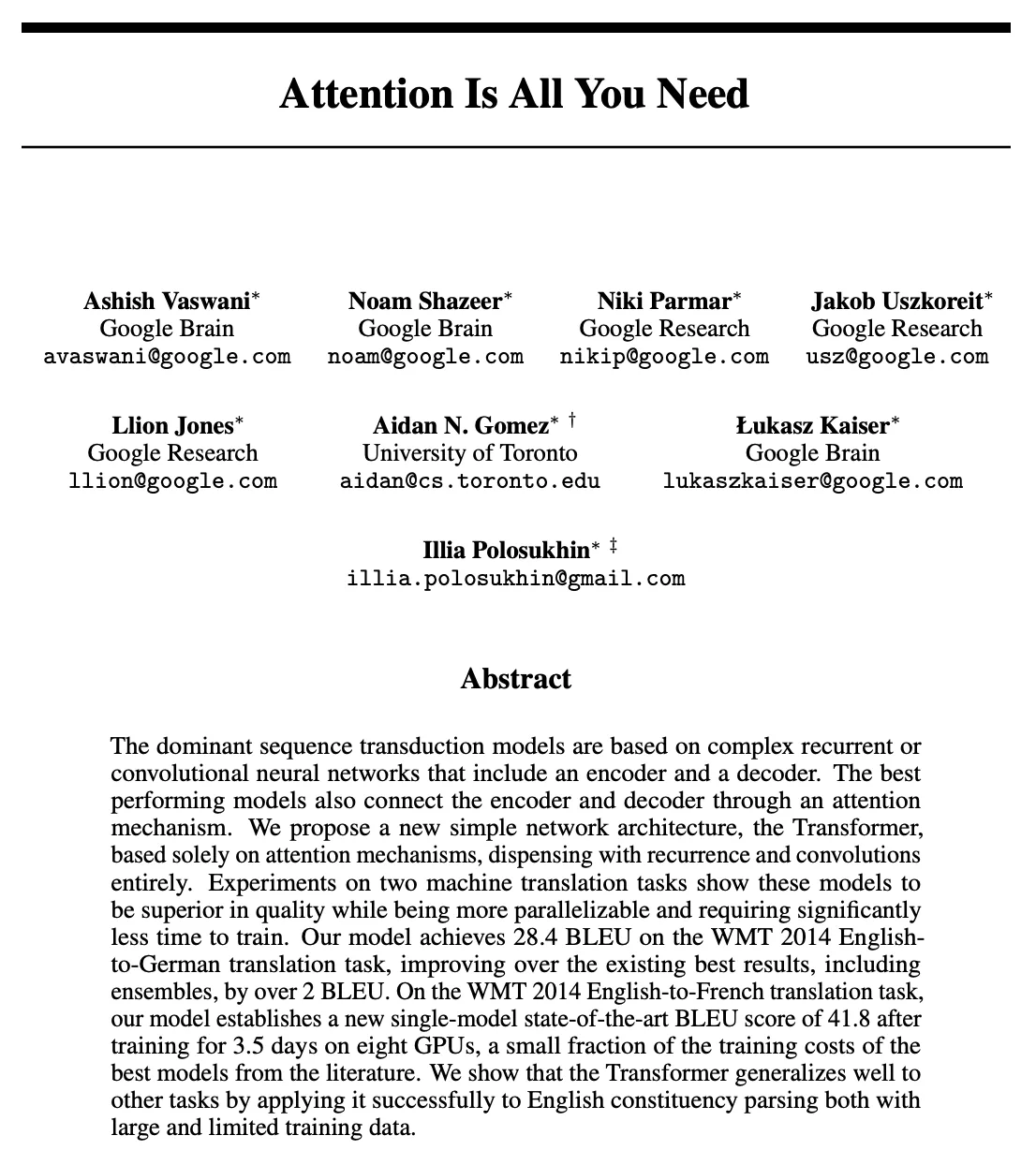
Every author name, every affiliation, every citation marker, in order. Now with the rewrite on:
It sounds like a friend who read the paper and is walking you through it. Accurate, and you don't have to rewind.
What else people do with it
Bedtime stories in your own cloned voice. A slide deck turned into the talk that goes with it. Stand-up material. ASMR:
Pair it with your own voice
Add voice cloning and the output is your voice, not a stock one. Read novels, explain papers, record a podcast intro, narrate a reel — without recording any of it.
Cloning is included on every paid plan: one voice on Basic, four on Pro, twenty on Max. See pricing for the current details, or browse the public voice catalog if you'd rather use a ready-made voice.
Why it works
Three things do most of the lifting:
- Context awareness. The model reads for meaning before it reads aloud, so it can decide what a passage is actually saying and how a listener would say it.
- Multimodal input. Not just plain text — it handles images and PDF documents too.
- Smart trimming. Ads, code blocks, navigation cruft and stray characters get dropped instead of narrated.
It also streams: playback starts while the rest of the audio is still being generated, so you're not staring at a progress bar.
All of this comes out of what our product and engineering teams learned building ListenHub — and out of a lot of blunt user feedback. Thank you for that.
Who it's for
- Content creators turning posts and knowledge bases into audio without a recording session.
- Audiobook listeners who want narration with some life in it.
- Business teams producing training material, product walkthroughs, and announcements.
- Developers adding an audio version of their content for readers who need or prefer it.
- Educators converting lecture notes, textbooks, and papers into something students will finish.
Try it
It runs in your browser under text to speech — paste text, drop a link, or upload a file and hit generate. It's in the ListenHub iOS and Android apps too.
Want to build on it? The same voices are available through our API, including MCP and Agent Skills integrations. Start with the API documentation.
And if you want a two-host show instead of a single narrator, that's AI podcast — still the fastest way to get from a link to something worth listening to.